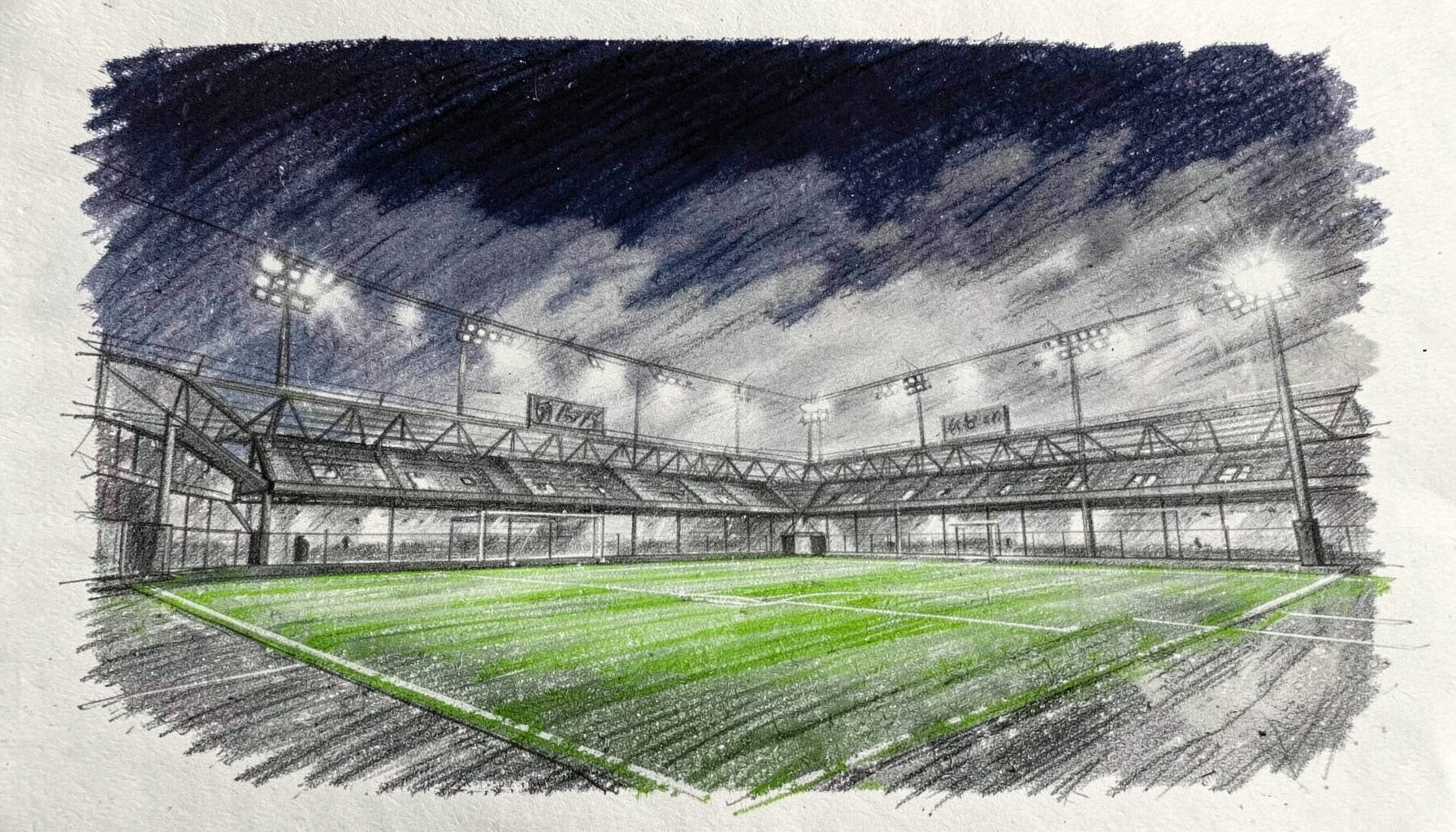
Breaking barriers: Nepal's female football referees
For decades, the touchline has been one of football's quieter battlegrounds for gender equality. While millions of Australians gather at Melbourne Rectangular Stadium to cheer the Matildas, or debate the latest VAR controversy over flat whites in a Brisbane café, the women blowing whistles across the Himalayas often work without a crowd at all.
Nepal's female match officials are rewriting what it means to officiate in South Asia. Their journey from local five-a-side pitches in Kathmandu to continental fixtures monitored by the AFC reveals a sport in slow, stubborn transition. In a nation where cricket's glamour and football's gritty growth share the same headlines, these women are proving that fair play begins long before the final whistle.
A whistle in a male-dominated game
Until recently, the sight of a woman in black officiating a men's match in Nepal was almost unheard of. Even now, ANFA appoints far fewer women to senior fixtures than to women's tournaments, and grassroots clubs in the Terai often default to male officials simply because the local federation has no female contact on file.
The cultural weight is heavier than the tactical clipboard. Many have faced questions about marriage prospects, family approval, and rumours that travelling to away fixtures is inappropriate. Social media pile-ons, a familiar pain for Australian referees checking their phones after A-League matches in Sydney, are a daily reality in Nepal, where women officials often moderate their own comments to keep the peace.
Participation in coaching clinics and referee courses in Lalitpur and Pokhara has climbed steadily since 2019, suggesting that momentum is finally shifting. The appetite for the role is there; the recognition is catching up.
The practical hurdles off the pitch
Pay remains the most concrete barrier. Male referees in Nepal's A-Division often receive a match fee that covers transport and a modest meal allowance, while female counterparts in the women's league frequently negotiate their own compensation. Some cover long bus journeys from Birgunj to Kathmandu out of their own pockets.
Kit and equipment are another pressure point. FIFA's referee development programmes supply basic uniforms, but boots, whistles, flags, and fitness watches usually come from the official's own salary, an outlay that any parent volunteering at a suburban club in Perth would recognise. Without sponsorship, many Nepali women buy second-hand boots from Indian markets or rely on hand-me-downs from senior colleagues.
Harassment on the pitch is not always verbal. Disputed decisions have, in isolated cases, been followed by physical intimidation from players or spectators, and reporting channels remain weak. Australia's Sporting Recourse Centre and the integrity units attached to codes like cricket and rugby offer a contrast, providing independent complaint pathways that have not yet found a Nepali equivalent.
Mentorship, courses, and the foreign coach effect
Pathways are opening, slowly. ANFA now partners with the AFC on regional exchange initiatives, sending promising officials to India, Thailand, and Malaysia for joint training camps. The federation has also begun inviting female referees into mixed-gender development squads, a step that was unthinkable a decade ago.
The wider influence of visiting expertise on Nepali football has been documented in recent coverage of foreign coaches in Nepal. Korean, Japanese, and Brazilian coaches have raised technical standards while importing training cultures that respect match officials as professionals rather than convenient targets.
Below is a snapshot of how female officiating in Nepal compares with experiences elsewhere in the region, framed for Australian readers who track the progress of the Matildas and their officials.
| Aspect | Nepal (Women) | Australia (Women) | AFC Average |
|---|---|---|---|
| Entry-level match fee | Negotiated, often unpaid | Set by FA, hourly minimum | Modest, varies |
| Access to kit grants | Limited, self-funded | Subsidised through FA programmes | Inconsistent |
| Harassment reporting | Informal, club-dependent | Independent integrity units | Patchy |
| Annual intake growth since 2019 | Strong | Steady | Mixed |
Visibility and the role of media
Visibility shapes aspiration. When the All Nepal Football Association began streaming women's domestic fixtures, viewership climbed and applications to referee courses doubled within a season. The same effect can be seen in Australia, where the W-League's free-to-air broadcasts have helped shift the referee's image from faceless authority to recognisable athlete.
Bootballer's photo-feature galleries regularly highlight women working on Nepali pitches, from teenage assistants in Dharan to senior officials preparing for AFC C-certificate assessments. Putting faces to the whistle matters; it reassures young girls that the touchline can belong to them too.
Australian outlets such as The Women's Game and ABC Sport have shown how consistent editorial attention can build household names out of match officials. A similar media culture in Nepal would accelerate the cultural shift that policy can only nudge.
Building the next generation
The most encouraging sign is the age of those entering the profession. Several of Nepal's active female referees are under twenty-five, balancing university studies with weekend fixtures in the Bagmati province. Their presence in mixed officiating crews at school tournaments signals a generation for whom a woman in the middle is no longer newsworthy.
Policy support would help. Australia's recent Strengthening Women's Sport measures, including reporting requirements around gender pay gaps for national sporting bodies, offer a template that Kathmandu could adapt. Subsidised travel, clear complaint pathways, and a national database of qualified female officials would cost relatively little and unlock a great deal.
Readers who want to back this rising generation can follow the women's league calendar, share the names of women in black on social media, and support campaigns pushing for equal match fees across South Asia. The referee's whistle has always been small but sharp; in Nepal's case, it is beginning to cut in a new direction.